Tip Creep: Why Every Business Now Turns the Screen Around
How Tip Prompts Spread: Follow the Interchange Fees
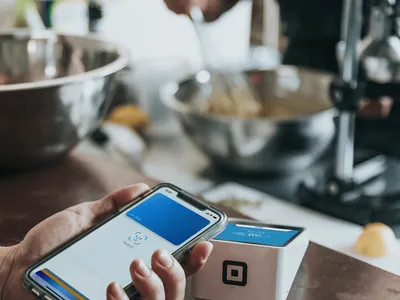
Tip creep isn't a sudden surge in consumer generosity or greedy business owners acting alone. It has a single technological origin point: the shift from physical cash registers to software-defined iPad POS terminals like Toast, Square, and Clover starting around 2014.
In legacy card processing, adding a tip line required custom hardware terminal programming. In modern cloud POS software, enabling a tip screen is literally a single toggle switch in a merchant dashboard. More importantly, payment platforms operate on a transaction processing model — typically charging merchants 2.6% + 10¢ per card swipe.
THE PROCESSOR INCENTIVE FORMULA
When a $5.00 coffee receives a $1.50 tip on screen, total processing revenue rises from $0.23 to $0.27.
Across millions of daily transactions, enabling counter tip prompts by default across thousands of merchants generates tens of millions in additional high-margin fee revenue for POS companies.
Anatomy of a Counter Screen: 4 Design Tactics That Push You to Tip
Select Tip Amount
Calculated on total ($6.54 incl. tax)
Where Tipping Is Expected vs. Where Prompt Is Just Software
"Tip Fatigue" Is Backfiring on Service Workers
72%
Pew Research Center
72% of U.S. adults say tipping is expected in significantly more places today according to the Pew Research Tipping Survey.
63%
Bankrate Survey
63% of Americans now hold at least one negative view of tipping per the Bankrate Tipping Report.
Researchers call this the fatigue spillover effect. When consumers feel manipulated by prompts at airport kiosks, self-service ice cream shops, and retail checkouts, they begin withholding tips in sit-down restaurants and delivery settings where workers actually rely on gratuities to survive.
The 3-Step Counter Tipping Decision Rule
- 1
Did a human provide active personal service?
If you grabbed a bottle of water from a fridge and scanned it yourself, hit "No Tip". If someone made a custom pour-over coffee or carried food to your table, move to Step 2.
- 2
What is the worker's compensation structure?
Sit-down restaurant servers depend on tips for 80%+ of income. Counter staff at corporate chains earn hourly base pay. Tip 18–20%+ for servers, $1 or 10% for counter craft service.
- 3
Use cash for counter appreciation
Dropping a $1 or $2 bill into a physical tip jar ensures 100% of the money goes directly to the shift team without processing fee cuts or management redistribution.
Calculate Fair Tips for Dining & Services
Split bills fairly across group parties, calculate pre-tax tips, and avoid terminal calculation errors.